
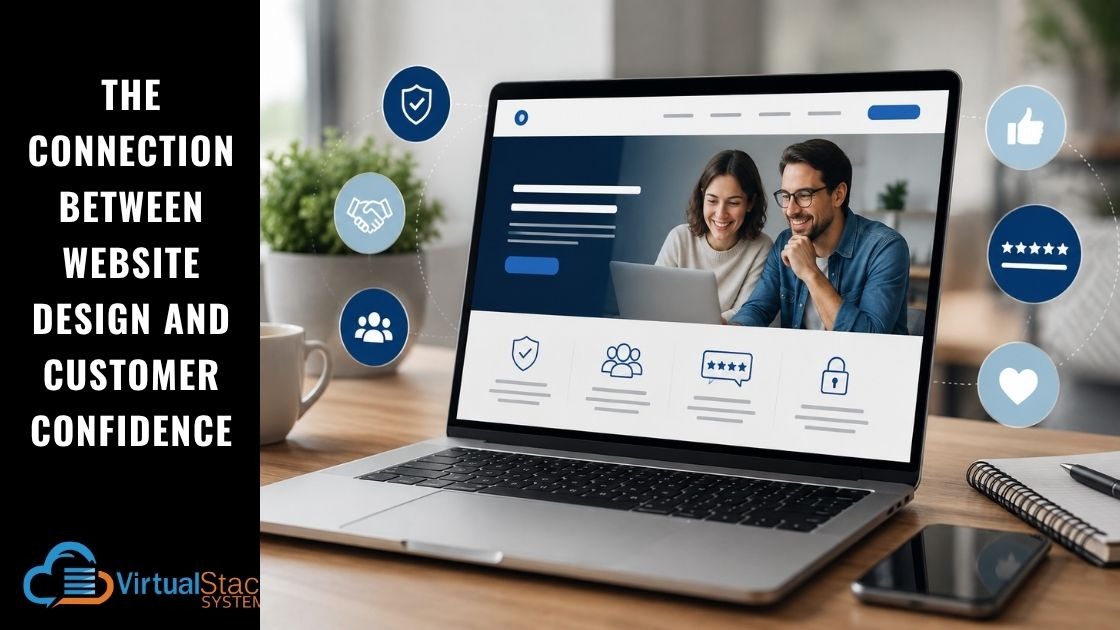
28 Sep The Connection Between Website Design and Customer Confidence

When potential customers visit your website, they are doing more than looking for information. They are forming an impression of your business. Within moments, visitors may begin asking themselves questions: Does this company look professional? Can I trust them? Do they understand what they’re doing? Will they make it easy to work with them?
That makes website design about much more than colors, fonts and photographs. A well-designed website can help establish credibility, reduce uncertainty and give visitors the confidence they need to take the next step.
Research from Stanford’s Web Credibility Project found that design decisions can have a significant influence on whether visitors perceive a website as credible. Its guidelines also recommend making it easy for visitors to verify information and demonstrating that there is a real organization behind the website.
So, how exactly does website design influence customer confidence?
First Impressions Matter
Your website may be one of the first interactions someone has with your business. A potential customer might discover you through Google, a social media post, an online advertisement or a referral. Before calling or sending an inquiry, there’s a good chance they’ll visit your website to learn more. A dated, cluttered or confusing website can create doubts — even if the business itself provides excellent products or services.
On the other hand, a clean, modern and professional website can immediately communicate that a business takes its customers and its services seriously. This doesn’t mean a website needs to be flashy or filled with elaborate animations. In many cases, effective design is about clarity: making the information visitors need easy to find and understand.
Professional Design Builds Credibility
Customers naturally make assumptions based on what they see. If a website contains outdated information, broken links, inconsistent branding, low-quality images or difficult navigation, visitors may wonder what else the business doesn’t maintain. As Sitepact notes, “Customers may question the legitimacy of a company if its website appears cluttered or out of date. Poor-quality images and uneven branding cause confusion and undermine confidence.”
The opposite is also true. Consistent branding, high-quality imagery, well-written content, clear navigation and an organized layout can create an impression of professionalism and attention to detail.
Clear Navigation Reduces Friction
Imagine walking into a physical business and being unable to figure out where to go, what the company offers or how to speak with someone. You probably wouldn’t feel particularly confident about doing business there. The same principle applies online.
Visitors should be able to quickly answer basic questions such as:
- What does this business do?
- Who does it serve?
- Where does it operate?
- Why should I choose it?
- How much does it cost, or how can I request pricing?
- How do I contact the business?
Good website navigation helps visitors find those answers without making them work for them. Google’s guidance on page experience similarly emphasizes factors such as mobile usability, security, clear presentation of content and avoiding intrusive elements that interfere with the visitor’s experience.
Mobile-Friendly Design Shows You Understand Your Customers
A website that looks great on a desktop but is difficult to use on a smartphone can quickly undermine confidence. Visitors shouldn’t have to pinch and zoom, scroll sideways or struggle to tap tiny buttons. Responsive design allows a website to adapt to different screen sizes, creating a more consistent experience across phones, tablets and computers. Mobile usability is not simply a technical consideration. It is part of customer service. When a website works smoothly on the device a customer happens to be using, it sends a subtle but important message: this business has considered my experience.
Speed Can Influence Perception
Website performance can also affect how visitors perceive a business. A slow website can be frustrating. Visitors may abandon a page before they’ve even had an opportunity to learn what the company offers. Google includes loading performance and Core Web Vitals among the factors businesses should consider when evaluating page experience.
Fast-loading pages don’t just make websites more pleasant to use. They can contribute to the overall impression that a business is organized, professional and attentive to its customers.
Trust Signals Give Customers Reasons to Believe You
A website shouldn’t simply tell visitors that a company is trustworthy. It should give them evidence.
Trust signals might include:
- Customer testimonials
- Genuine reviews
- Case studies
- Before-and-after examples
- Professional certifications
- Industry memberships
- Awards
- Client logos, where appropriate
- Information about the team
- A physical business address
- Clear contact information
- Links to authoritative sources
Testimonials and reviews can be particularly powerful because they provide evidence from other customers. However, authenticity matters. The Federal Trade Commission (FTC) advises businesses to avoid deceptive review practices and emphasizes that reviews should reflect genuine customer experiences. The FTC’s Consumer Reviews and Testimonials Rule also addresses deceptive practices involving fake or false reviews and testimonials.
In other words, don’t manufacture credibility. Build it and demonstrate it.
Good Content Is Part of Good Design
Website design isn’t limited to visual elements. The words on your website are an important part of the user experience. A beautiful website with vague, generic copy may still leave visitors wondering what makes the business different.
Effective website content should explain:
- What you offer
- Who you help
- What problems you solve
- What makes your business different
- What customers can expect
- What they should do next
Clear content helps eliminate uncertainty — and reducing uncertainty is an important part of building confidence. For businesses offering professional or specialized services, this can be especially important. Potential customers may be unfamiliar with the terminology, process or options involved. A website that explains those things clearly can position the business as knowledgeable while making the customer feel more comfortable.
Calls to Action Should Feel Like the Next Logical Step
Once a visitor has developed confidence in your business, what happens next? A good website makes the answer obvious.
Depending on the business, the desired action might be:
Request a Quote
Schedule a Consultation
Call Today
Book an Appointment
Get Directions
Learn More
Effective calls to action don’t pressure visitors. Instead, they make it easy for someone who is ready to move forward. A confusing or difficult-to-find contact process can undo some of the confidence a website has built.
Consistency Matters Across Every Page
Imagine visiting a company’s homepage and seeing a polished, modern design — only to click onto another page that looks completely different. Inconsistent colors, fonts, imagery, layouts and messaging can make a business appear less established. Consistent design helps create a unified brand experience. Our blog post — “More Website Design Mistakes to Avoid” — covers this topic in detail.
That consistency should extend beyond the website, too. Whenever possible, your website, social media profiles, advertisements and other digital marketing should communicate a recognizable brand identity. Customers should feel as though they’re interacting with the same business wherever they encounter it.
Design Can Help Turn Confidence Into Action
Ultimately, the goal of a business website isn’t simply to look good. It should help visitors move from awareness to interest, from interest to confidence, and from confidence to action.
Consider the journey:
A visitor finds your website.
The design creates a positive first impression.
Clear navigation helps them find information.
Professional content establishes expertise.
Reviews and other trust signals provide evidence.
A clear call to action makes the next step easy.
That’s where website design and marketing come together.
Your Website Is Part of Your Sales Team
Your website works for your business around the clock. It answers questions, introduces your services, demonstrates your expertise, establishes credibility and encourages potential customers to contact you — all before anyone on your team has spoken with them. That’s why website design should be viewed as a business investment rather than simply a visual exercise.
A professionally designed website doesn’t guarantee that every visitor will become a customer. But it can remove unnecessary obstacles, answer questions, reinforce credibility and make it easier for the right customers to say yes!
Is Your Website Building Confidence — or Creating Doubt?
If your website looks outdated, is difficult to navigate, doesn’t work well on mobile devices or fails to communicate why customers should choose your business, it may be costing you opportunities. A website redesign isn’t necessarily about making your website more complicated. Often, it’s about making it clearer, faster, easier to use and more convincing. Because when customers feel confident in your website, they’re more likely to feel confident in the business behind it.
However, as we always say, you’re too busy running your business to be expected to be a web design expert. That’s what our Virtual Stacks Systems team is here for! Our full-service digital marketing agency offers experienced website design and redesign, SEO marketing, content writing, PPC advertising and so much more! We welcome the opportunity to help you meet your marketing objectives and succeed. Every business is unique, and so are our solutions! We are ready to be your partner in success!
Contact us today to get started!